






Blogfeed
Confidence doesn’t appear overnight.
It doesn’t come from big medals, perfect grades, or being “the best.”
Most of the time, real confidence grows quietly , through many small achievements, one step at a time.
As a parent or caregiver, you play a powerful role. The way you speak, encourage, and notice your child’s efforts can shape how they see themselves for years to come.
When children believe in themselves, they are more willing to:
Confidence is not about pride or showing off; it is about believing in oneself.
Also read : Top Summer Camp Activities for Kids and Preschoolers in India
Think about simple moments like these:
Confidence grows when tasks are slightly challenging but still achievable.
Too easy → child gets bored.
Too hard → child feels discouraged.
Choose small, age-appropriate responsibilities, like:
For toddlers:
For preschoolers:
For early school-age children:
Also read : Tips for Managing Separation Anxiety in Toddlers
Children make mistakes. They spill, drop, forget, break, fall, or answer wrong.
That’s normal.
When mistakes happen, stay calm and supportive.
Instead of:
“Why did you do that?”
“You should know better.”
Try:
“That happens sometimes. Let’s try again.”
“What could we do differently next time?”
Encourage Problem-Solving
When your child faces a challenge, don’t rush to solve it immediately.
Ask gentle questions:
You are guiding them to think, plan, and figure things out.
Confidence is also about having a voice.
Give your child chances to:
Listen carefully.
Comparisons can hurt, even when they are unintentional.
Statements like:
“Look, your cousin can do it.”
“Why can’t you be like them?”
make children feel small and ashamed.
Instead, focus only on your child’s journey:
“You’re improving so much.”
“You are doing better than before.”
Also read : From Our Family to Yours- The Values That Shape Learning at Pathways Early Years GK
You can plan simple activities that allow small achievements:
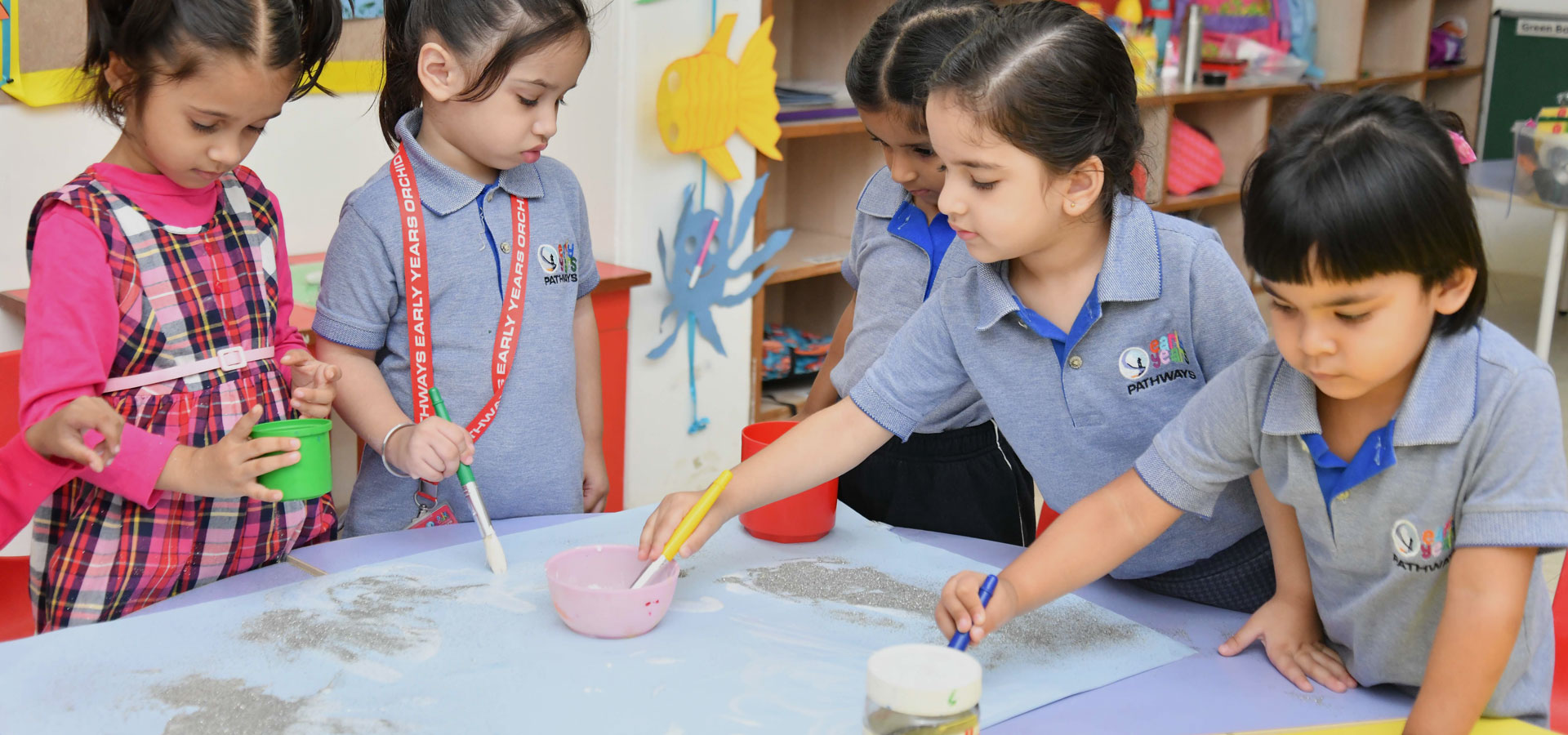
Each activity gives your child a chance to try, learn, complete , and feel proud.
Confidence doesn’t come from big rewards or constant praise.
It grows when you:
Every tiny achievement adds up.
